Many business websites look complete: strong photography, service lists, testimonials, and location information. Yet every CTA ends at one button: Chat on WhatsApp.
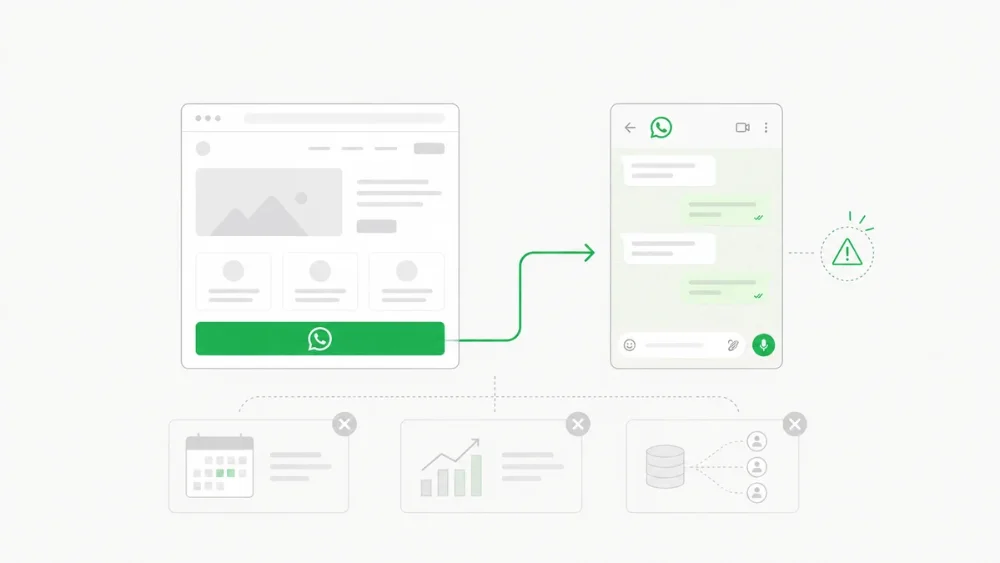
Technically, the business has a website. From a conversion perspective, the website is only a billboard sending every customer to another channel.
The WhatsApp button still matters
Indonesian customers are comfortable asking questions on WhatsApp. The button supports people who want human communication and customers with custom requirements.
The problem is not the button itself. The problem is having no alternative.
Not every visitor wants to chat
Some customers already know what they want. They want to see a slot and book immediately.
Some only need pricing, deposit instructions, meeting points, or cancellation policies.
Some want to ask a question without opening another application.
Some international customers do not yet recognise a local number.
When everyone is forced into WhatsApp, admins handle intent that could have been resolved through self-service.
The website loses conversion data
A WhatsApp button click can be tracked, but owners may not know:
- whether the customer sent a message
- what they asked
- whether the chat became a qualified inquiry
- whether the inquiry became a booking
- how much revenue came from the source
A booking page can record completion. An inquiry form can record submission. Web chat can record lead capture and booking creation.
This data helps the business improve advertising and the website using real conversion rather than clicks alone.
The website becomes fragile when the number fails
If the number is restricted, the SIM has a problem, or the link is wrong, the primary CTA fails.
The website should be the fallback. If it only contains a WhatsApp button, it fails together with the channel.
A healthier CTA structure
Use a clear hierarchy:
Primary: Book now
Secondary: Ask Arion / Web chat
Alternative: WhatsApp
Fallback: Email or phone
Customers still see simple choices. The primary CTA matches the business model.
For sessions, Book now opens date and slot selection.
For camps, it opens date-range, room, capacity, and deposit flow.
For inquiries, it opens a flexible requirement form.
Information that should not require chat
- pricing or starting price
- services and packages
- general availability
- location
- duration
- participant rules
- deposit
- cancellation policy
- what to bring
- FAQ
Clear information reduces repetitive admin replies.
How Arion turns the website into a booking channel
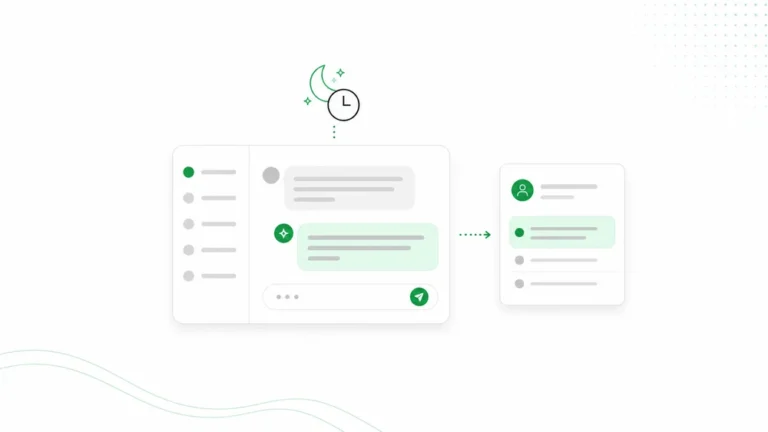
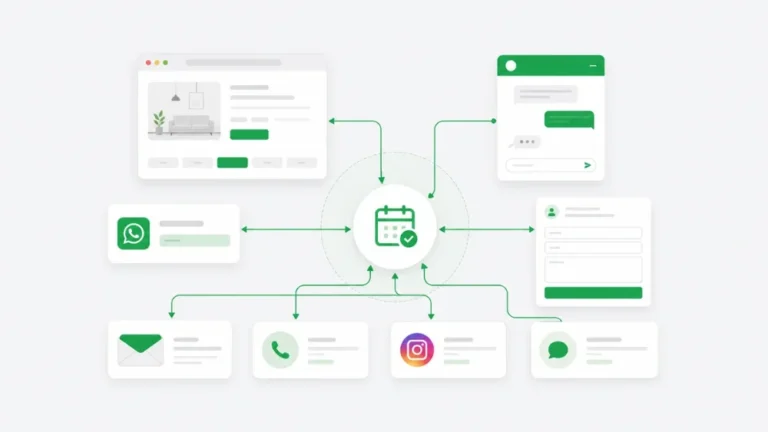
Arion gives each business a public booking page and AI booking chat. Chat can be linked as a full page or embedded through an iframe, hosted script, Next.js snippet, and WordPress plugin.
Customers can ask questions or book without leaving the website. Owners receive the data in a dashboard.
WhatsApp remains available for follow-up and customer preference rather than serving as the only conversion endpoint.
Conclusion
A website should not only be a detour to WhatsApp.
A strong website can:
- answer basic questions
- capture inquiries
- accept bookings
- measure conversion
- continue working when one channel fails
A WhatsApp button is one CTA. It is not the entire booking strategy.