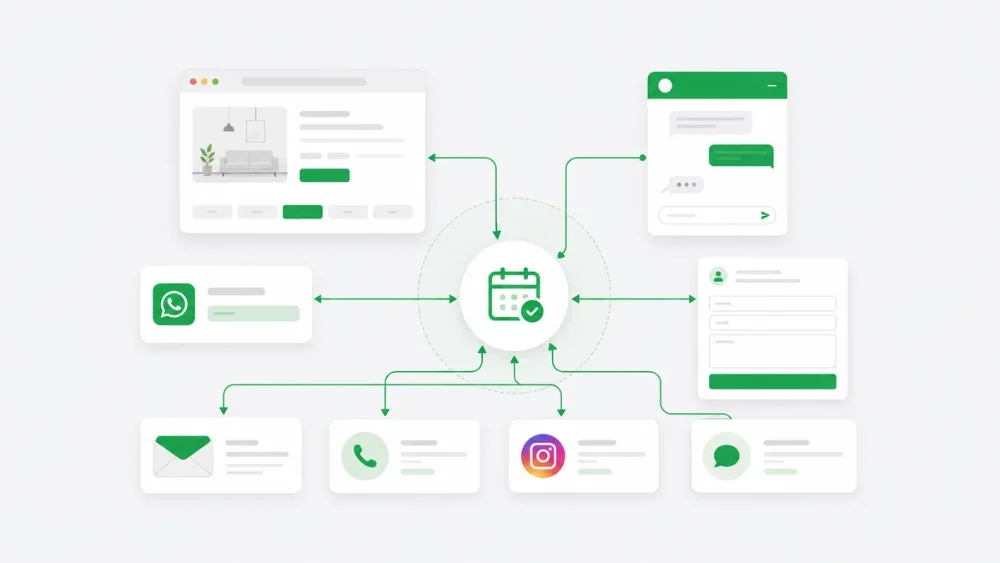
When WhatsApp has a problem, owners often search for a “WhatsApp replacement.” That is not always the right question because not every business need requires another messaging application.
The better question is: which channel is best for each stage of the customer journey?
WhatsApp remains strong for personal communication. Service information, availability, data collection, booking, and confirmation can run through other channels.
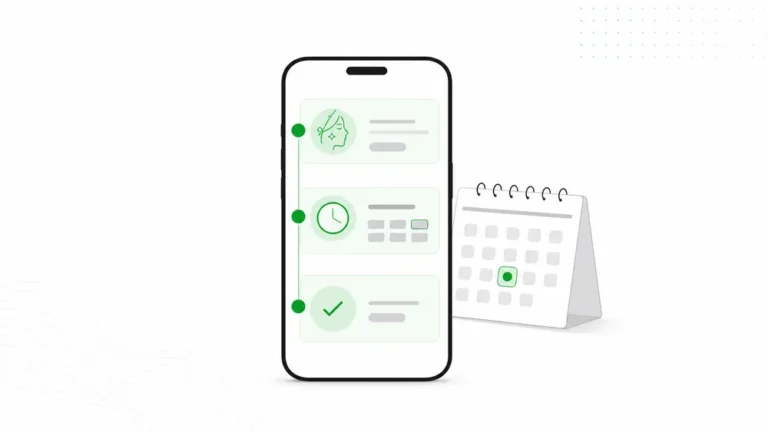
1. Booking page
A booking page works well for high-intent customers.
Customers can:
- choose a package
- select a date and slot
- submit details
- see pricing and policies
- receive a confirmation reference
Its advantage is structured data. Its limitation is that uncertain customers may not be ready to fill in a form.
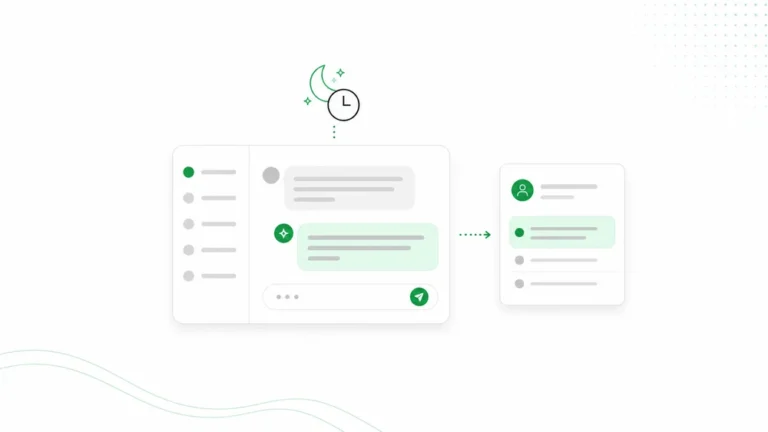
2. AI web chat
AI web chat bridges conversation and booking.
Customers can ask natural-language questions, understand packages, check information, and move toward a booking or inquiry.
A useful AI chat should do more than answer FAQs. It should connect to availability and booking data so conversations result in action.
3. Inquiry form
An inquiry form suits businesses where requests cannot be confirmed through a simple slot.
Examples include custom tours, agencies, venues, event services, and consultations.
The form can collect optional dates, budget, group size, requirements, and contact details. Owners then follow up with complete context.
4. Email
Email is useful for confirmation, documents, longer details, and international customers.
It is less suitable for real-time conversations. Use email as part of the flow rather than the only customer interface.
5. Phone
Phone calls help with urgent or high-value cases. The limitation is that conversation data is not automatically recorded and calling is not always convenient.
After the call, the booking still needs to enter a system.
6. Instagram Direct Message
Instagram DM is close to discovery. Customers can ask a question immediately after seeing content.
Like WhatsApp, however, DM is not a booking database. Direct serious customers to a booking page or inquiry form.
7. Third-party marketplaces
Marketplaces can provide discovery and trust. Businesses may pay commission, have less control over data, and depend on platform rules.
Use them as distribution channels rather than the only source of customers.
A useful combination for booking businesses
For many businesses, an effective structure is:
- website as the home base
- booking page for high intent
- AI web chat for questions
- inquiry form for custom requirements
- WhatsApp for personal follow-up
- email for confirmation
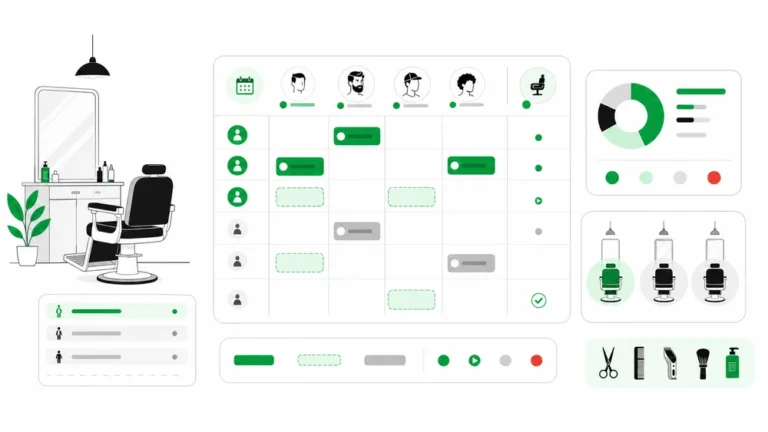
- dashboard as the source of truth
The customer experience remains simple because each person chooses the most relevant path.
Differences by business mode
Session businesses need a date and time slot. A booking page with real-time availability is the strongest alternative.
Camps need date ranges, occupancy, rooms, and deposits. A generic form is often not enough; a multi-day flow is required.
Inquiry businesses need flexible requirement collection. Customers should not be forced to choose a slot.
How Arion connects the channels
Arion provides a public booking page, AI booking chat, inquiry mode, and website embed.
Owners do not need separate dashboards for each entry point. Bookings and inquiries enter the same system. WhatsApp can remain a follow-up channel.
Conclusion
The best alternative to WhatsApp is not always another chat application. It is a customer journey that does not force every step into one conversation.
Use each channel for the job it does best and keep bookings in one source of truth.