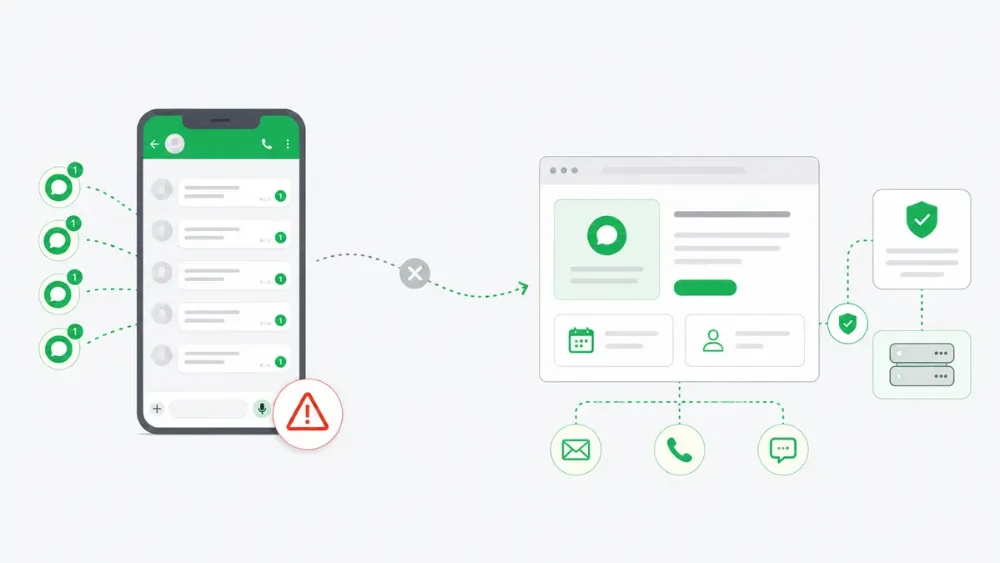
A business changes its WhatsApp number. The new number is published on Instagram and the website. Within a short period, many customers send inquiries. Soon after, the account is restricted several times and eventually cannot be used normally.
This situation makes it easy to conclude: the new number became busy, so the system assumed it was a bot.
The conclusion sounds plausible, but it cannot be presented as an official fact. Meta does not publish its complete account-risk formula and does not provide a guaranteed safe traffic threshold for new numbers.
The useful approach is to examine the signals that may have appeared together.
Did incoming inquiry volume cause it?
Not necessarily.
Incoming inquiries mean customers initiated the conversations. This is different from a business broadcasting or messaging many people without prior interaction.
However, high inquiry volume can change the account's behavior. Admins may reply very quickly, reuse identical text, send the same links, request payments, and follow up with many customers at once.
The risk may therefore come from the usage pattern created after traffic arrived, rather than inbound traffic itself.
Why a new number may look different
A new number usually does not have a stable history of business activity. At the same time, the business may immediately:
- replace the number across all digital assets
- announce the new number to past customers
- receive traffic from advertising and Instagram
- answer many chats with similar templates
- send booking or payment links
- follow up with leads who have not replied
Each activity may be legitimate. When they happen together at high volume, the overall pattern may look unusual to a security system.
This remains a possible explanation, not proof that every new number requires a specific warm-up period. There is no official 7-day, 14-day, or 30-day duration that guarantees safety.
What to audit
When a similar case happens, do not only count incoming chats. Review the whole journey.
1. Inquiry source
Did customers actually start the conversations from the website, Instagram, advertisements, or QR codes? Or did the team also contact an old database proactively?
2. Reply pattern
Were identical messages sent within a very short period? Did each chat immediately receive several separate messages, links, and payment instructions?
3. Applications and tools
Was the official application used? Were browser extensions, bulk senders, unofficial clients, or unsupported automation involved?
4. Business identity
Were the business name, image, description, address, and website clear? Customers who do not recognise a new number may be more likely to block or report it.
5. Outbound activity
Did the team send a mass announcement, automatic follow-up, or messages to old customers who had not agreed to hear from the new number?
6. Number history
Mobile numbers can be recycled by operators. It may be impossible to know whether a number was used before. Because Meta does not publicly explain how recycled-number reputation is handled, treat this as a possibility rather than a conclusion.
A lower-risk number transition
Keep the old and new numbers active in parallel during the transition when possible. Avoid moving all traffic in one day.
Complete the business profile before promoting the number. Customers should clearly recognise the name, logo, website, and business context.
Publish one clear announcement on the website and Instagram. Avoid mass messaging the entire database when consent and policy compliance are unclear.
Send customers with booking intent to a booking page or inquiry form. The new number then does not need to handle every step from basic questions to data collection.
Reduce fragmented replies. One complete contextual response is better than five short messages sent in sequence.
Prepare a backup before migration
Changing a number always creates operational risk. Apart from restrictions, links may be updated incorrectly, activation may fail, customers may be confused, the SIM may have a problem, or staff access may not be ready.
A business should not wait for a problem before creating a second path.
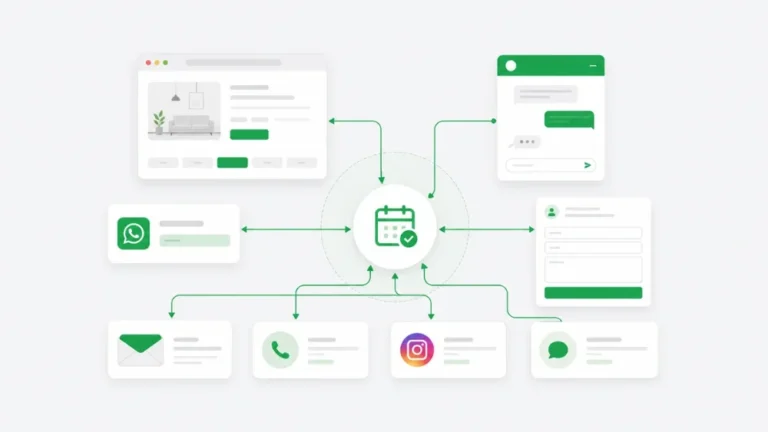
The website can provide:
- a booking page
- an inquiry form
- AI web chat
- email contact
- a service-status notice
- WhatsApp as one option rather than the only option
Where Arion fits
Arion helps businesses receive bookings or inquiries through the website without forcing the entire customer journey into the new WhatsApp number.
Customers can choose services, dates, slots, date ranges, or submit requirements through AI booking chat. The data enters the owner dashboard and can be followed up through any available channel.
When WhatsApp has a problem, the booking link and web chat remain available. When WhatsApp is working normally, owners can still use it for personal follow-up.
Conclusion
A new WhatsApp Business number becoming busy may coincide with a restriction. There is no official evidence that incoming inquiry volume alone automatically causes it.
Audit reply patterns, outbound activity, tools, customer reports, business identity, and the migration process as a whole.
Most importantly, do not make the new number the business's only revenue entry point. Prepare a booking page and web chat as parallel channels from the start.
FAQ
Does a new WhatsApp number need to be warmed up?
There is no official warm-up procedure with a guaranteed duration or chat limit. Start naturally, use official applications, and avoid mass or repetitive patterns.
Should the old number be disabled immediately?
When possible, maintain a transition period so customers have time to recognise the new number.
Can web chat act as a backup?
Yes. Web chat and a booking page provide a customer path that does not depend on access to one WhatsApp number.