Calendly is widely used for scheduling meetings.
For consultation calls, demo calls, interviews, or simple appointments, tools like Calendly are practical. A customer chooses an available time, the calendar syncs, and the meeting is added automatically.
But for many service and activity businesses, booking needs do not stop at “choose a time.”
A surf school needs to know guest count and instructor capacity. A spa needs to manage treatments, staff, and duration. A rental business needs dates, inventory, and availability. A camp or retreat needs date ranges, room or capacity logic, deposits, and pre-arrival details. An agency or custom tour provider needs to capture inquiries that may not have a fixed schedule yet.
This is where the difference between a scheduling tool and a booking management tool becomes clear.
What Calendly is good for
Calendly and similar appointment schedulers work well when the main need is choosing a meeting time.
Examples include:
- Sales calls
- Consultation calls
- Interviews
- Internal meetings
- Product demos
- Simple one-on-one coaching sessions
The flow is usually simple:
Choose meeting type → choose date and time → enter name/email → event is added to the calendar
For many use cases, that is enough.
The limitation appears when the booking has more operational detail than a normal meeting.
What a booking management tool is good for
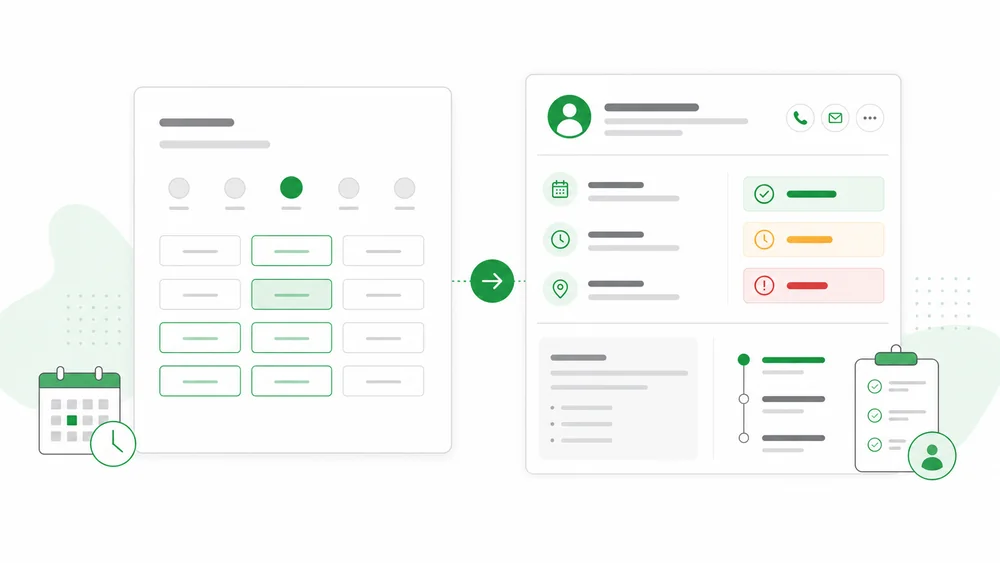
A booking management tool is better when the business needs to manage the booking process from start to finish.
Not only the time, but also:
- Selected service or package
- Number of guests
- Availability and capacity
- Booking status
- Deposit or payment status
- Customer notes
- Reminders
- Rescheduling
- Daily operations
- Owner dashboard
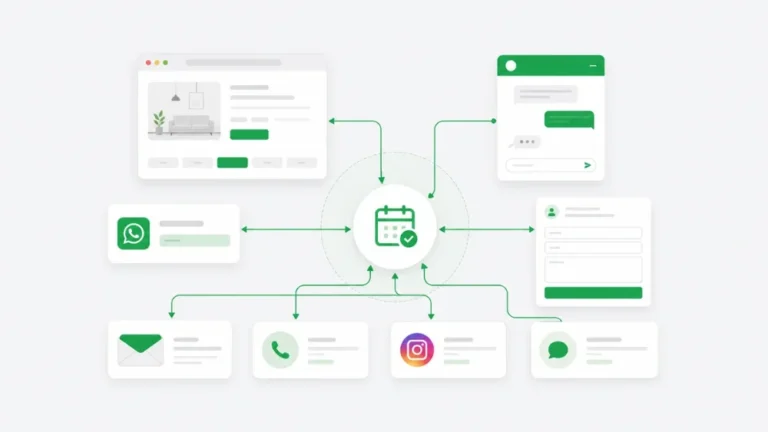
For customer-facing businesses that receive bookings from ads, websites, WhatsApp, or walk-ins, these details matter.
A scheduler can tell the owner that someone booked 9 AM. But it may not clearly show who is coming, what their level is, whether they paid a deposit, or whether capacity is still safe.
The core difference: calendar vs operations
Calendly focuses on the calendar.
A booking management tool focuses on booking operations.
That is the most important difference.
A calendar answers:
“When does this person want to meet?”
Booking management answers:
“Who is this customer, what are they booking, what date, is capacity safe, what is the status, have they paid, and what does the owner need to do next?”
For a business selling consultation time, the first question may be enough. For a business selling experiences, services, activities, or camps, the second question is more relevant.
Example: surf school
If a surf school uses a simple scheduler, a customer may be able to choose 9 AM.
But the owner still needs to know:
- How many people are joining?
- Are they beginners or intermediate surfers?
- Group lesson or private lesson?
- Do they need board rental?
- Are there enough instructors?
- Is slot capacity still safe?
- Has the deposit been paid?
- Has the meeting point reminder been sent?
If all of this has to be asked manually after the booking, the scheduler only solves a small part of the problem.
A more suitable booking management tool should capture this information from the beginning.
Example: surf camp or retreat
For camps, a simple scheduler is usually not enough.
A camp is not a 10 AM meeting. It is a multi-day stay.
The owner needs to manage:
- Check-in date
- Check-out date
- Duration
- Room or bed capacity
- Occupancy calendar
- Deposit
- Dietary requirements
- Emergency contact
- Arrival details
- Pre-arrival reminders
If the tool only has time slots, the owner needs many workarounds. Rooms become “slots.” A 5-day package becomes a meeting. Deposit is tracked somewhere else. Dietary notes go to WhatsApp.
The system may appear to work, but operations remain messy.
Example: inquiry business
For agencies, consultants, event vendors, or custom tour operators, customers may not be ready to pick a time immediately.
They may need to explain their needs first:
- What kind of website do they need?
- What business is the campaign for?
- How many guests are joining the tour?
- Are the dates flexible?
- What is the budget range?
- Are there special requests?
In these cases, an inquiry form or AI booking chat can be more appropriate than sending customers directly to a scheduler. The owner needs context before offering a meeting time or quotation.
When Calendly is enough
Calendly or a similar scheduler can be enough when:
- The service is a simple meeting
- Capacity management is not needed
- Deposit tracking is not needed
- Package logic is not needed
- Room or inventory management is not needed
- A daily operations dashboard is not needed
- Customers do not ask many questions before booking
If the business mostly handles consultation calls or demo meetings, a scheduler can be very helpful.
When a booking management tool is needed
A booking management tool becomes more useful when:
- Bookings come from several channels
- Customers need to choose a package or service
- Capacity needs to be checked
- There is risk of double-booking
- Deposits or payment status matter
- Follow-up is still manual
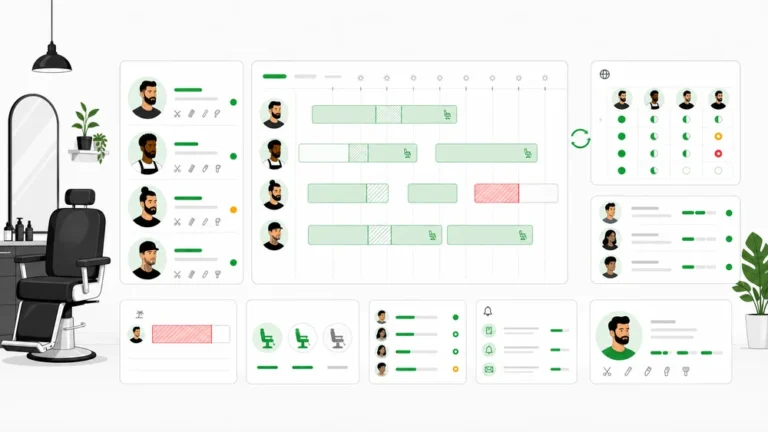
- Owners need a dashboard for today and the next few days
- The business has session, camp, or inquiry flows
- Customers often ask questions before booking
At this point, the problem is not just scheduling. The problem is booking operations.
How Arion is different
Arion is not a meeting scheduler. Arion is an AI booking assistant and booking management tool for service, activity, camp, and inquiry-based businesses.
Arion helps customers choose packages, ask questions through AI chat, submit bookings or inquiries, and move into a confirmation flow. On the owner side, Arion provides a dashboard for bookings, schedules, customers, deposits, conversations, and operations that need attention.
For session mode, Arion supports dates, times, slots, and capacity. For camp mode, Arion supports date ranges, occupancy, room or capacity logic, and deposits. For inquiry mode, Arion captures customer needs without forcing them to choose a meeting time too early.
So if the business only needs meeting scheduling, a scheduler may be enough. But if it needs a complete booking flow, a booking management tool makes more sense.
Conclusion
Calendly and booking management tools do not have to replace each other. They serve different functions.
Calendly is useful for scheduling meetings. Booking management tools are better for managing customer-facing bookings that involve packages, availability, capacity, deposits, customer data, and follow-up.
For service and activity businesses, the question is not simply “Should we use Calendly?” The better question is:
Is the main problem choosing a time, or managing the booking until it is completed?
If the answer is the second one, the business needs more than a scheduler.
FAQ
Can Calendly be used for service businesses?
Yes, especially for simple appointment or consultation-based services. But for businesses with packages, capacity, deposits, or operations dashboards, a booking management tool is usually more suitable.
What is the difference between an appointment scheduler and a booking management tool?
An appointment scheduler focuses on time selection. A booking management tool manages a fuller process: customer data, availability, booking status, payment, follow-up, and daily operations.
Can Arion replace Calendly?
It depends on the need. If the only requirement is meeting scheduling, Calendly may be enough. If the business needs AI booking chat, booking pages, inquiry forms, dashboards, and session/camp/inquiry modes, Arion is more relevant.
Is Arion suitable for consultation businesses?
Yes, if the business needs inquiry flow, lead qualification, and clearer follow-up before offering a meeting time.
CTA
Need more than a meeting booking link?
With Arion, customers can choose packages, submit inquiries, chat with an AI booking assistant, and move through a cleaner booking flow — while owners manage schedules, customers, deposits, and follow-up from the dashboard.
Arion helps businesses manage bookings, not just choose times on a calendar.