A surf camp looks simple from the outside: guests choose dates, arrive, surf, sleep, and leave. Behind the scenes, owners need to manage rooms, beds, date ranges, and deposits at the same time.
When these four things live in different tools, operations quickly become messy. Rooms in a spreadsheet, deposits in WhatsApp, date ranges in Google Calendar, guest notes in an admin’s memory. It works until one booking is missed.
Rooms and beds must be separated
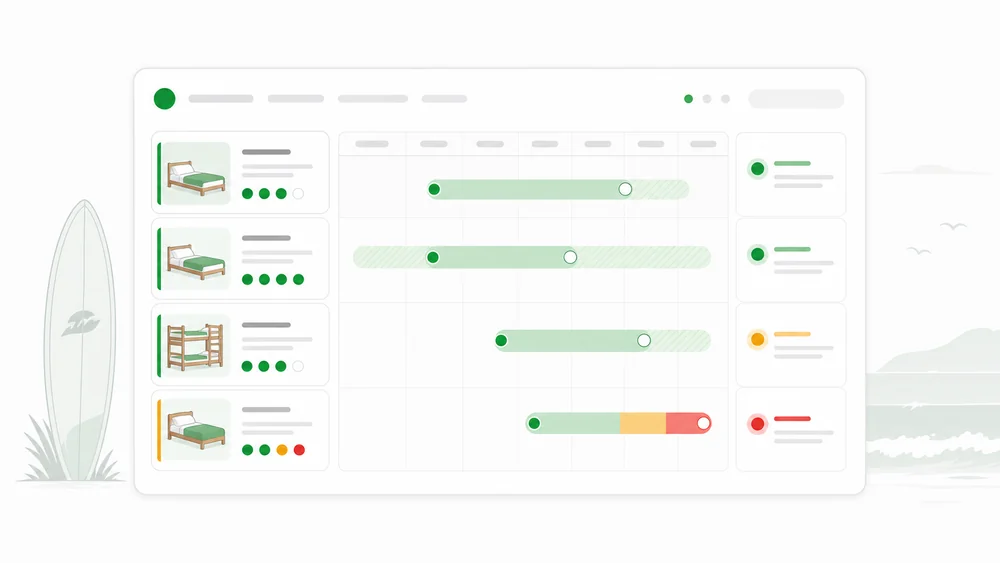
Dorm beds and private rooms are not the same. Dorms are counted per bed. Private rooms are counted per room. Shared rooms have their own logic. If everything is merged into one “capacity” number, the system cannot answer important questions such as: are dorms full while a private room is still available?
For camps, capacity must be calculated per date. Guest A may check out on Friday morning, while Guest B checks in on Friday afternoon. The system needs to understand this turnover logic.
Date range is the core of camp mode
A camp booking is not an hourly slot. It has a start date and an end date. Every night between those dates needs to be checked for occupancy.
A healthy system should prevent a new booking if any date in the requested range is already full. If the system only checks the check-in date, double-booking can still happen.
Deposits keep bookings serious
A booking without a deposit often makes owners hold beds for too long. A guest says “yes, confirmed,” but there is no payment commitment yet. During high season, this is risky because a bed can appear booked even though it is not secured.
Deposit status should be clear:
- Unpaid
- Partial
- Paid
- Cancelled or released
This helps owners know which bookings need follow-up, which are secured, and which should be opened again.
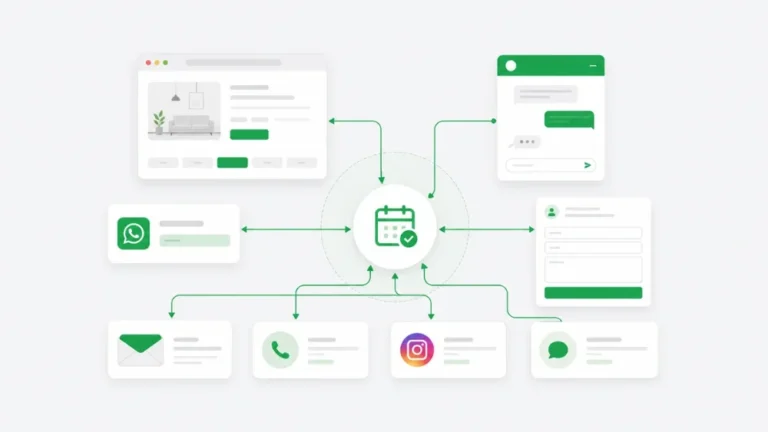
One system reduces manual cross-checking
An ideal flow looks like this:
- Guest selects package and date range
- System checks room/bed availability per date
- Guest submits booking or inquiry
- Confirmation page shows deposit instructions
- Owner sees booking status in the dashboard
- Deposit is received and booking is marked confirmed
No need to check four tools for one guest.
How Arion helps
Arion camp mode helps owners manage multi-day bookings with date ranges, capacity, occupancy views, deposit tracking, and booking details in one dashboard. AI booking chat can also capture inquiries before customers move into the form.
Owners can keep the guest experience relaxed and personal, while the backend no longer feels scattered.
Conclusion
Rooms, beds, date ranges, and deposits are the operational foundation of a surf camp. If one of them is still manual, the risk of error remains. When they are managed in one system, the camp can scale without making the owner more tired.
Related reading
- Manage surf camp availability without double-booking
- Surf camp booking form: guest fields to collect before arrival
- Deposit management for surf camp bookings
- Surf camp industry page
CTA
Arion helps surf camps bring date ranges, occupancy, deposits, and booking details into one flow.
Less manual cross-checking. More organized bookings.